
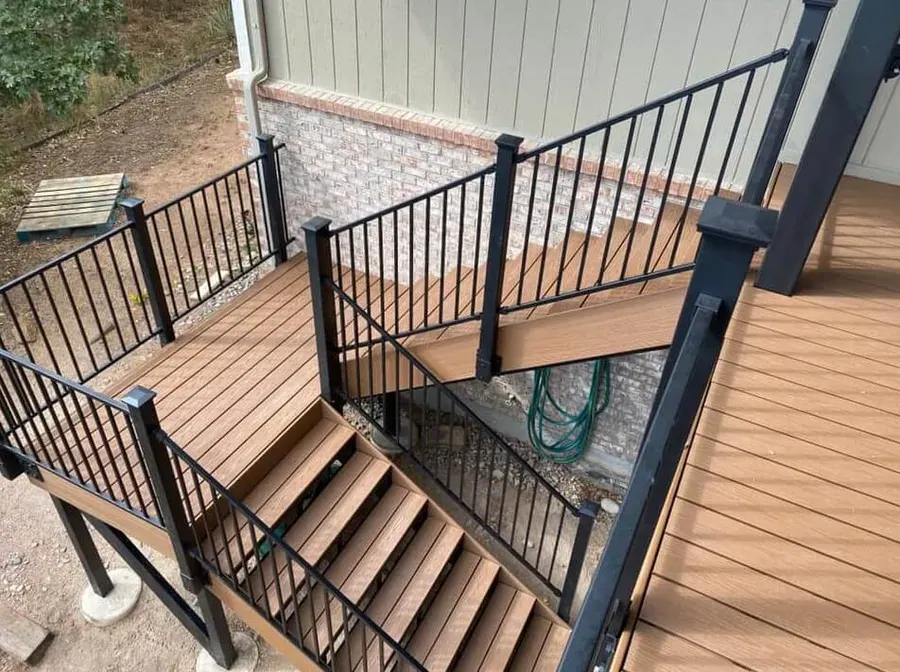
A deck’s reliability depends heavily on components homeowners rarely see: footings, posts, beams, joists, flashing, lateral restraint, and fasteners. These decisions are best evaluated for a specific property and should be confirmed with the licensed construction professional performing the work.
How deck loads travel
People, furniture, and other loads pass through deck boards into joists, beams, posts, and ultimately foundations. Connections between these members must be appropriate for the project.
For Greenville-area homeowners, the best choice also depends on the building layout, exposure, site access, and the expected use of the outdoor space. A clear written scope helps avoid assumptions before materials are ordered.
Why ledgers deserve attention
An attached deck ledger interfaces directly with the home. Inadequate flashing or improper attachment can create both structural and moisture problems.
For Greenville-area homeowners, the best choice also depends on the building layout, exposure, site access, and the expected use of the outdoor space. A clear written scope helps avoid assumptions before materials are ordered.
Water management around framing
Drainage, end-grain exposure, hardware compatibility, and air circulation can influence durability in humid climates. Protective details should be designed for the specific assembly.
For Greenville-area homeowners, the best choice also depends on the building layout, exposure, site access, and the expected use of the outdoor space. A clear written scope helps avoid assumptions before materials are ordered.
What to ask during construction
Ask how posts are supported, whether joists and railings are detailed for the chosen products, how water is shed away from the house, and who verifies applicable requirements.
For Greenville-area homeowners, the best choice also depends on the building layout, exposure, site access, and the expected use of the outdoor space. A clear written scope helps avoid assumptions before materials are ordered.