
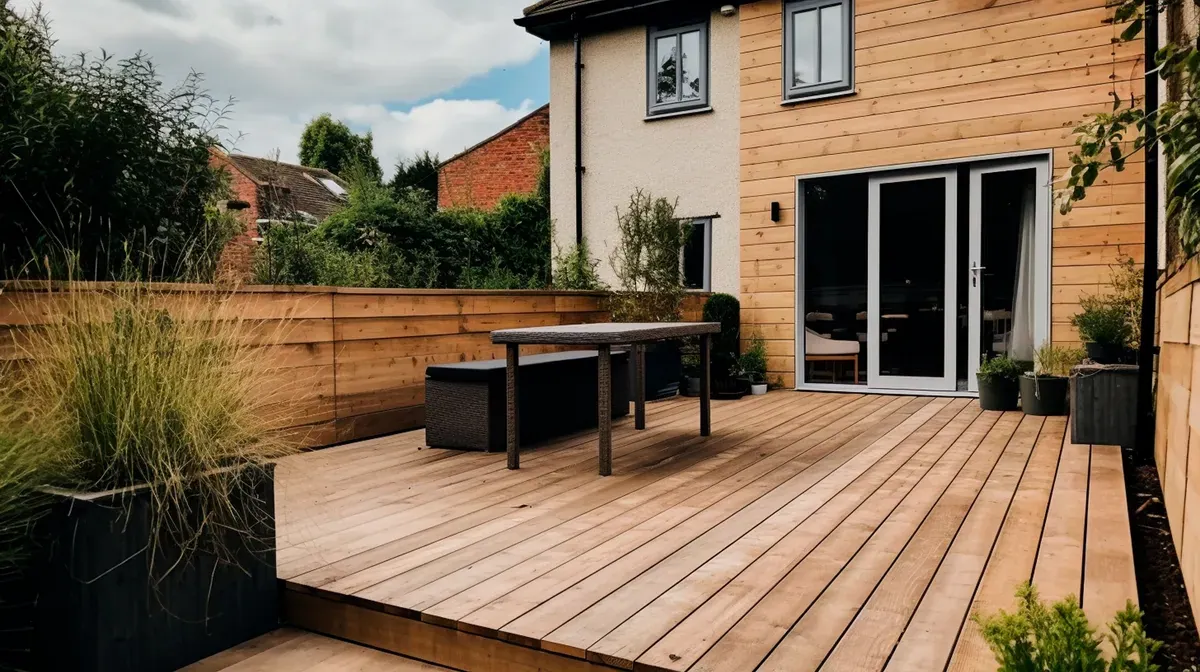
Both improve outdoor comfort, but screening changes airflow, insect control, visibility, doors, and maintenance compared with an open covered deck. These decisions are best evaluated for a specific property and should be confirmed with the licensed construction professional performing the work.
How you want to use the space
A covered deck can provide shade and rain protection without enclosing the perimeter. Screens add insect protection, but influence the feeling of openness and access to the yard.
For Greenville-area homeowners, the best choice also depends on the building layout, exposure, site access, and the expected use of the outdoor space. A clear written scope helps avoid assumptions before materials are ordered.
Roof structure and waterproofing
Both approaches require careful roof planning, attachments, drainage, and foundations. Adding screens does not eliminate those structural requirements.
For Greenville-area homeowners, the best choice also depends on the building layout, exposure, site access, and the expected use of the outdoor space. A clear written scope helps avoid assumptions before materials are ordered.
Consider circulation
Door placement, stair access, furniture, fans, and lighting can be as important as square footage.
For Greenville-area homeowners, the best choice also depends on the building layout, exposure, site access, and the expected use of the outdoor space. A clear written scope helps avoid assumptions before materials are ordered.
Think about seasonal comfort
Screens reduce insects but do not create a climate-controlled room. A fully enclosed sunroom is a different construction scope.
For Greenville-area homeowners, the best choice also depends on the building layout, exposure, site access, and the expected use of the outdoor space. A clear written scope helps avoid assumptions before materials are ordered.